ADVERTISEMENT
From October 2026, Spain will be tightening its road traffic regulations. This will affect e-scooters, cyclists, motorcyclists, motorists and motorhome users. On the Costa Blanca, the changes will be felt most keenly on country roads, in coastal towns and on busy through roads.
Spain is revising key parts of its highway code. Royal Decree 518/2026 amends the General Traffic Regulations. Most of the provisions will come into force on 1 October 2026, whilst certain technical requirements will not take effect until a year later.
On the Costa Blanca, this does not only affect urban traffic in Alicante, Benidorm, Dénia, Calpe or Torrevieja. It is particularly on the roads linking coastal towns, housing estates and inland communities that cars, delivery vehicles, motorbikes, road cyclists, e-scooters and motorhomes often find themselves in confined spaces. The new regulations therefore focus primarily on safety distances, compulsory equipment and clearer rules for overtaking.
A minimum age of 15 is being introduced for e-scooters and other personal mobility vehicles (VMPs). In addition, riders will be required to wear a helmet in future. At night or in poor visibility, a high-visibility vest must also be worn.
Commercial users, such as delivery drivers on e-scooters, are required to wear a helmet and high-visibility vest at all times whilst working. Breaches are classified as serious administrative offences and can result in a fine of 200 euros.
The requirement to keep headlights on even during the day will come into force at a later date: it is due to take effect from 1 October 2027.
The helmet requirement for cyclists on country roads is being tightened. Previous exemptions, such as those relating to extreme heat, long inclines or medical reasons, will no longer apply. On inter-urban roads, the rule will then be: no cycling without a helmet.
On the Costa Blanca, this affects numerous popular routes in the hinterland and along the coast, for example between Marina Alta, Marina Baixa, Alicante and Vega Baja. The rule becomes particularly relevant where road cyclists, commuters and motor traffic all share narrow roads.
Motorists, too, need to change their approach when overtaking. Anyone overtaking cyclists on country roads must reduce their speed by at least 20 km/h below the speed limit. The minimum lateral distance of 1.5 metres remains in force. If there is more than one lane in each direction, drivers must change lanes completely when overtaking.
New equipment requirements are being introduced for motorcyclists and moped riders. Protective gloves are compulsory on country roads, and closed-toe footwear is required on all roads. This applies to both riders and passengers. Here too, offences may be penalised with a fine of 200 euros.
As regards gloves, one technical issue remains unresolved: the exact requirements are yet to be set out in a ministerial order. Until then, the requirement is based on the protective features of standard motorcycle gloves available on the market.
Another new rule concerns the right-hand hard shoulder. Motorcycles are permitted to use it in the event of a traffic jam or slow-moving traffic, but only on sections where this is explicitly signposted and at a maximum speed of 30 km/h. Where there are no such signs, riding on the hard shoulder remains prohibited.
From 1 October 2027, safety helmets for moped riders must be type-approved. Simple certification will no longer be sufficient.
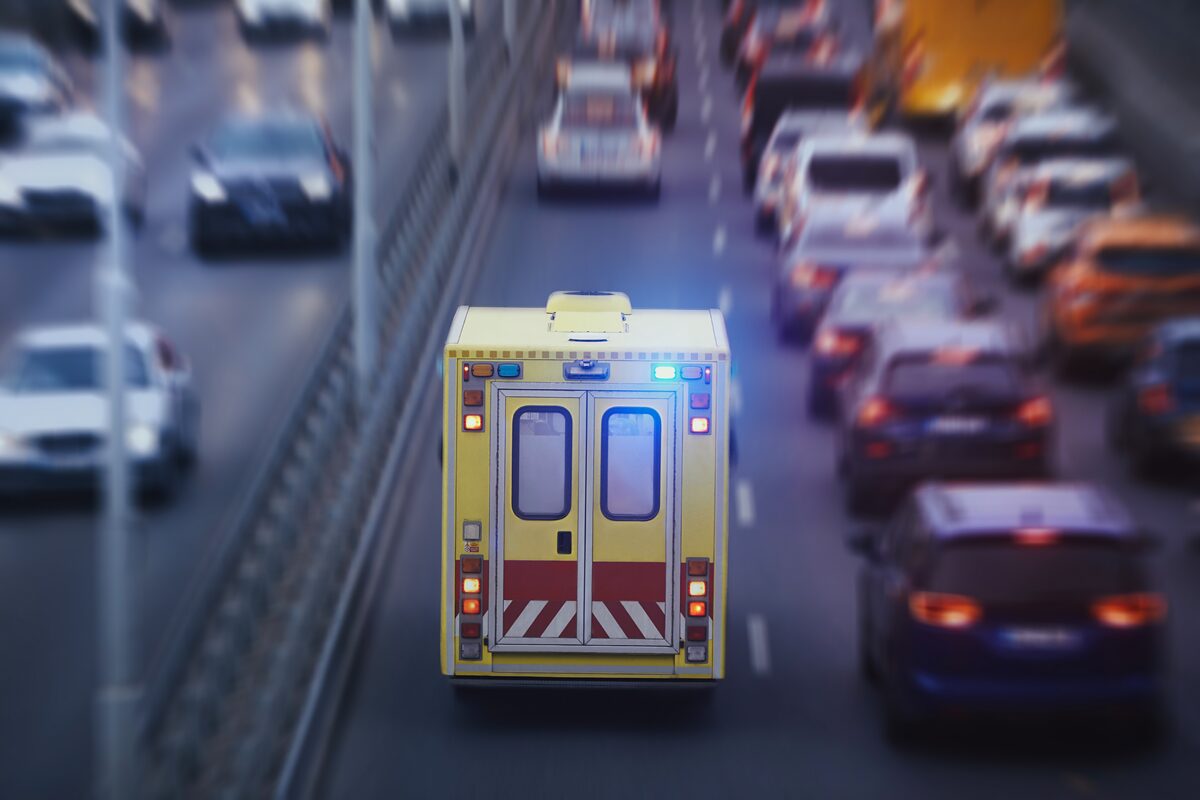
In future, in the event of traffic jams on motorways and expressways, vehicles must form a clear lane in the centre. This ‘carril de emergencia’ is intended to make it easier for the police, emergency services and other emergency vehicles to get through.
Many German-speaking residents are familiar with this principle from Germany or Austria. In Spain, however, it has not been firmly established in everyday life until now. From October 2026, forming an emergency corridor will be an explicit requirement.
On the Costa Blanca, this is particularly relevant on busy roads such as the AP-7, the A-7 and the N-332, and around major access roads leading into the coastal towns.
In future, anyone driving past a vehicle that has broken down, the scene of an accident, a breakdown service vehicle, roadworks or emergency vehicles must keep a distance of at least 1.5 metres.
In addition, speed must be reduced by at least 20 km/h below the speed limit.
In everyday life, this can apply to many situations: broken-down vehicles at the side of the road, local authority works, refuse collection, police checks or breakdown services on through roads and coastal roads.
Several exemptions from the seatbelt requirement are being abolished. Taxi drivers, drivers of goods vehicles and driving instructors will also be required to wear their seatbelts at all times in future.
There are also a number of changes within built-up areas. Safe routes to school will be covered by a specific legal framework. Furthermore, at pedestrian traffic lights, a flashing amber light for vehicles may no longer, as a general rule, be shown at the same time as a green light for pedestrians.
For local authorities on the Costa Blanca, this could be particularly relevant in areas around schools, in narrow town centres and in busy pedestrian areas.
For motorhomes, the distinction between parking and camping is defined more precisely. When parked, no parts of the vehicle may protrude beyond its outline. The vehicle must rest on its tyres. No liquids may be drained from the interior.
Normal parking therefore remains possible. The situation may be different, however, if awnings, supports, tables, chairs or drains are used. In such cases, a parked vehicle can quickly turn into a camping situation.
This is particularly important on the Costa Blanca, as many local authorities have been taking a tougher stance on unauthorised camping and motorhomes left parked long-term for years. In addition to the national rules, local regulations must also be observed.
From 1 October 2026, the following rules, amongst others, will apply: a minimum age of 15 for e-scooters, compulsory helmet use for VMP riders, high-visibility vests at night or in poor visibility, a generalised helmet requirement for cyclists on country roads, new overtaking rules, forming an emergency corridor in traffic jams, maintaining greater distance at breakdown and incident sites, stricter seatbelt requirements, and more precise rules for motorhomes.
From 1 October 2027, the requirement for e-scooters to have lights fitted will also apply during the day. From that date, protective helmets for moped riders must also be type-approved.
Yes. The Spanish Highway Code applies throughout the country, including the province of Alicante and the whole of the Valencia region.
No. The new general helmet requirement applies to country roads. Within built-up areas, the existing rules continue to apply.
No. This is only permitted on signposted sections and only up to a maximum of 30 km/h.
Yes, provided they are parked like a normal vehicle. However, anyone using awnings, supports, chairs or other camping equipment may be breaking the rules. In addition, the relevant local authority regulations apply.
Source: This is based on Royal Decree 518/2026 of 24 June 2026, published in the Boletín Oficial del Estado on 26. June 2026, as well as the information from the Dirección General de Tráfico regarding the reform of the Reglamento General de Circulación.
ADVERTISEMENT