
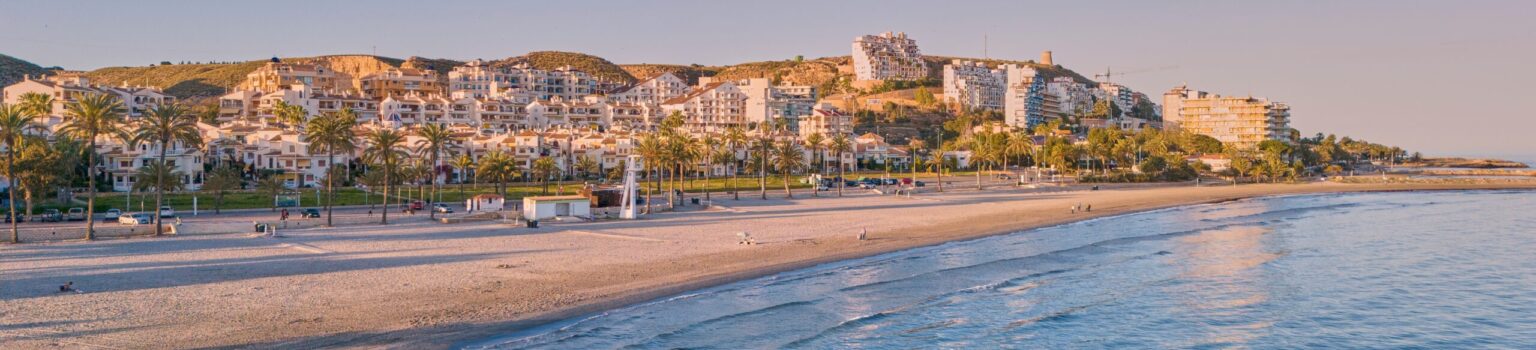
The coastal town of Santa Pola is located south of Alicante and combines maritime work, natural salt lagoons and a lively town centre. If you walk through the harbour area in the early morning, you will see the town as it is: not a staged scene, but a functioning place of work with a strong identity. People on their way to the shipyards, fishermen sorting their catch, schoolchildren, commuters - a clear everyday rhythm that characterises the city.
Behind the Castillo Fortress and in front of one of the most important coastal fisheries in the region, Santa Pola has found a role that is neither loud nor posturing. The town combines history, nature and the local economy to create an image that is unique in the southern Marina Baixa.
History between harbour basin and fortress
The Castillo Fortress from the 16th century was once a protective structure against attacks from the sea. Today, it forms the centre of the village - with cultural events, exhibitions and a small maritime museum that explains the importance of fishing.
The Roman past goes back even further: the Villa Romana del Palmeral shows residential structures and mosaics from antiquity. It lies inconspicuously between modern streets and is an example of how Santa Pola leaves old layers visible without exaggerating them.
Harbour, fishing and a clear place to work
The harbour of Santa Pola is one of the busiest on the Costa Blanca. Trawlers, smaller fishing boats, repair businesses and cargo ships characterise the picture. The daily activity in the fishmongers' halls shows how much the town still lives from the sea.
This includes the maritime industry that is located around the harbour: boat mechanics, ship chandlers, trade, small bars and shops. A place that functions economically, not designed.
Beaches and bays - part of everyday life
Santa Pola's stretch of coastline never looks staged. The beaches are close to the town centre and are used just as naturally as parks or squares.
The beaches are part of the daily routes - sports, commuting, meetings, short breaks.
Natural environment: salt lagoons, flamingos and vast plains
Directly behind the city lie the Salinas de Santa Pola - a large wetland area consisting of salt basins, lagoons and observation zones. People work here to extract salt, while the area is also a habitat for flamingos and numerous bird species.
The Museo de la Sal explains this economic and natural area precisely, without folklore. The combination of industrial utilisation and nature conservation makes Santa Pola unique in the region.
A place with clear functions
Santa Pola is not a tourist magnet, but a centre of work and life with direct connections to Elche and Alicante. Many residents commute, others work locally - in fishing, logistics, catering, small businesses and services.
The townscape is made up of:
This mixture makes Santa Pola stable and clearly structured.
Mobility and location
Mobility is functional and well distributed here.
Places worth seeing
Market / Market type | Day / Time | What you will find there / speciality |
Weekly market / Mercadillo (street market) | Monday & Saturday, approx. 08:00-14:00 (Guía de Mercadillos) | Around 300-450 stalls with clothing, leather goods, household articles; on Saturdays also fresh fruit and vegetables, plants (The Costa Blanca Guide) |
Central Market / Mercado Central de Santa Pola | Monday to Saturday, approx. 07:30-14:00 (Saturdays until 14:30) (Ayuntamiento de Santa Pola) | Fresh vegetables, fruit, meat, fish, fish products; supplies for daily needs (Ayuntamiento de Santa Pola) |
Santa Pola in one sentence?
A place that combines work, coast and nature without any frills.


