

ADVERTISEMENT
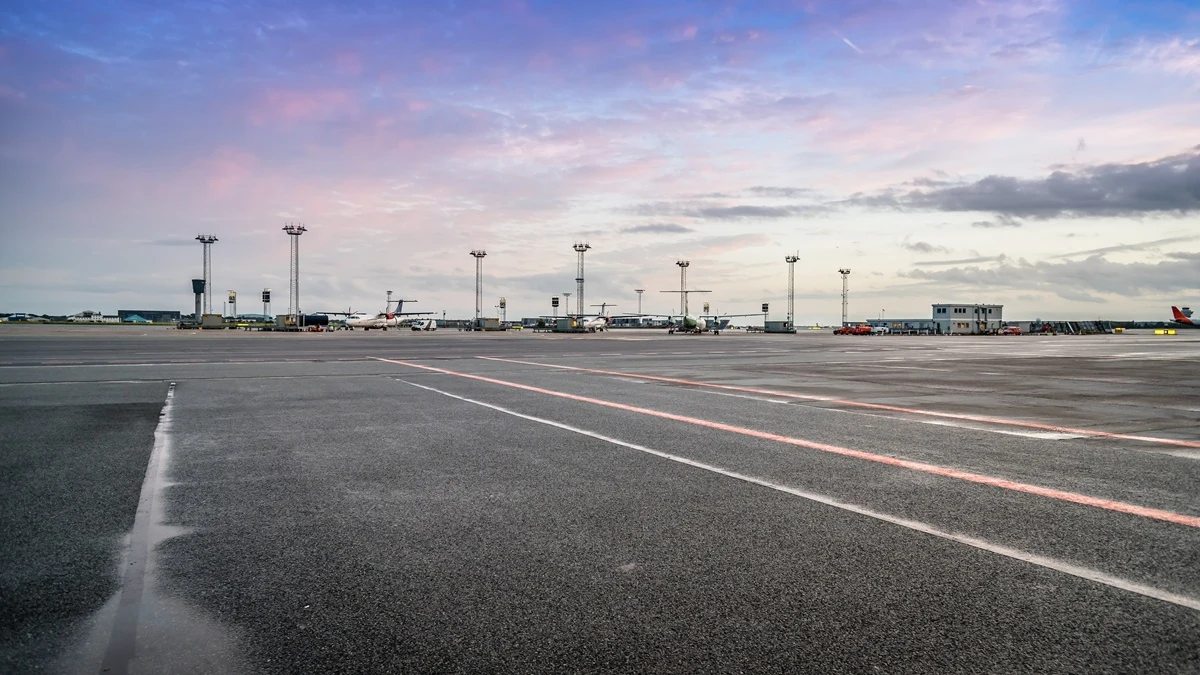
More gates, a new area for non-Schengen flights and significantly more terminal space: Aena has awarded the contract for the major expansion of Alicante-Elche Miguel Hernández Airport. The contract, worth around 15.6 million euros, marks an important step in an overall project for which Aena has earmarked investments of around 1.154 billion euros. However, further planning and approval procedures are still required before construction can begin.
Plans for the expansion of Alicante-Elche Miguel Hernández Airport are taking shape. Aena has awarded the contract for the design of the projects to refurbish and extend the terminal and airside areas. According to the published tender information, the contract has been awarded to a consortium comprising Sener Mobility, Cemosa and Fairbanks Arquitectos. The contract is worth €12.922 million net, or around €15.64 million including tax.
However, this does not mean that construction work worth 15.6 million euros is set to begin just yet. The contract initially covers the planning of the individual measures, which are to be implemented in stages at a later date. A total period of 60 months has been set aside for these project planning services.
At the heart of the planned redevelopment is the extension of the existing passenger terminal. To this end, the old, disused Terminal 1 and the existing general aviation building are to be demolished. The existing boarding concourse is to be extended and a new boarding pier constructed on the land thus freed up. According to Aenas’ current plans, this will increase the terminal’s capacity by just under 30 per cent. New passenger boarding bridges and gates are set to provide additional handling capacity.
In addition to the terminal itself, the overall project also includes alterations to the aprons and taxiways, as well as improvements to access roads, car parks and the rest of the airport’s infrastructure. Aena estimates the total planned investment for this comprehensive modernisation programme at around 1.154 billion euros.
For international residents on the Costa Blanca, the planned non-Schengen area is of particular relevance.
Alicante-Elche Airport is heavily reliant on international traffic. The United Kingdom is by far one of its most important markets. In July 2026 alone, around 734,000 passengers were recorded on flights to and from the United Kingdom.
As the UK is no longer part of the Schengen Area, border and passport checks are required for these passengers. The new pier is therefore to feature a centralised border control area for non-Schengen traffic. In addition, new gates for these flights, as well as dedicated retail and catering areas, are planned. A new VIP lounge for passengers in this area is also part of the plans.
Travellers from the UK are likely to find this part of the expansion particularly noticeable, as the current security check and check-in areas can become very busy when passenger numbers are high.
The refurbishment is not limited to additional gates. Aena is also planning changes to the existing terminal. These include more space for security checks. The plans include automated security lanes and modern equipment for checking hand luggage.
The aim is not merely to create additional capacity. With this expansion, Aena is also explicitly seeking to process passenger flows more quickly and to stabilise the quality of handling services despite the continuing rise in passenger numbers.
The timing is no coincidence. The Alicante–Elche route continues to see a sharp rise in passenger numbers.
In 2025, 19,950,394 passengers passed through the airport – 8.5 per cent more than in 2024 and a new annual record. This made Alicante-Elche the fifth-largest airport in the Spanish Aena network, after Madrid, Barcelona, Palma de Mallorca and Málaga.
Growth is set to continue in 2026. From January to July, 12,402,145 passengers were recorded. This was 9.6 per cent more than in the same period last year. At the same time, the number of flight movements rose by 9.9 per cent to 78,259.
In July alone, a total of 2.341 million passengers were carried – an increase of 11.1 per cent year-on-year. International traffic accounted for by far the largest share, with just under 2.09 million passengers.
This is what makes the expansion particularly relevant for the Costa Blanca: for a large proportion of international residents, property owners and long-term visitors, Alicante-Elche is the most important link to their home countries.
The expansion is intended to enable the airport to handle significantly more traffic in future. Current plans indicate a capacity of at least around 26 million passengers a year.
However, this does not mean that Aena is already expecting 26 million actual passengers in 2031.
In the DORA III plan submitted in February 2026, the company forecasts 22.3 million passengers for Alicante-Elche in 2031. The increased technical capacity is intended to create a buffer and enable further growth beyond this period.
It is important to make a distinction here: the contract awarded was for the planning stage, not the entire construction project.
The consortium appointed is to develop the various sub-projects in stages over the coming years. In parallel, further procedures are underway for technical support, construction supervision and project management.
Aena has included the start of the major expansion in its plans for the next Documento de Regulación Aeroportuaria, DORA III. This document sets out the investments and framework conditions for the period 2027 to 2031.
However, as of 19 August 2026, the DORA III has not yet been definitively approved by the Spanish Council of Ministers. Aena’s Board of Directors adopted its final corporate proposal in February and forwarded it to the Directorate-General for Civil Aviation and the competition authority, the CNMC. The CNMC published its report in early June; according to Aena’s official timetable, the Council of Ministers is due to decide on the final DORA by September 2026.
For this reason, the investment and construction schedule currently outlined should not yet be regarded as the final completion date.
A second runway is not part of the project as currently planned. The calls for an additional runway, which have been made in parts of the province for years, should be distinguished from the current terminal extension.
Aena is initially focusing on increasing the capacity of the existing infrastructure. In addition to the larger terminal, this includes measures on taxiways and aprons designed to speed up aircraft handling and reduce ground movement times.
For passengers, the planning contract that has now been awarded therefore means one thing above all else: the major refurbishment of the airport has taken another step forward, but it will not begin tomorrow. It is only the individual projects, which are now to be drawn up, that will set out in detail what the terminal, gates, border control points, aprons and other areas will look like in future, and in what order they will be built.
As at 19 August 2026
Sources: Aena, Aena’s Supplier Procurement Portal, Ministry of Transport and Sustainable Mobility, CNMC; additionally, Alicante Plaza and Cadena SER for the latest contract award decision.
ADVERTISEMENT