ADVERTISEMENT
On 21 July 2026, the Spanish Council of Ministers approved the draft bill to amend the existing tobacco legislation
and forwarded to the Cortes Generales. The plan is to implement the most extensive expansion of smoke-free areas in more than
a decade. For the Costa Blanca, the impact on everyday life would be clearly visible. From the restaurant terraces in Dénia, Calpe and
From Benidorm, via the beaches of Alicante and Torrevieja, to communal swimming pools, concerts and town festivals, there would be numerous
Covers areas that have so far been wholly or partly exempt from the smoking ban.
The proposed ban is intended to cover all outdoor areas of catering establishments. This would mean that smoking would not be permitted in open
Dining is still permitted under awnings or on terraces sheltered from the wind on one side. The current distinction between indoor and
Outdoor areas would no longer be classified as dining terraces. Under the regulations currently in force, a terrace is considered an outdoor area,
if it is not covered or is surrounded by no more than two walls or side boundaries. There, it is permitted to
Smoking is generally permitted, provided that the operator or local regulations do not impose a ban.
If the draft is adopted in its current form, bars, cafés and restaurants would have to keep their outdoor seating areas completely smoke-free.
Designated smoking tables or ashtrays in the guest area would therefore no longer be permitted.
Seaside and riverside beaches are also to be explicitly included in the list of smoke-free areas. The ban would
so that they do not merely apply to individual local smoke-free zones, but apply in principle to beaches throughout Spain.
For the coastal towns between Dénia and Pilar de la Horadada, this would be a far-reaching change. The exact boundaries –
for example, opposite promenades, access routes, harbour areas or areas on the beach used for catering – is likely to be
will depend on the final version of the legislation and the subsequent implementation requirements.
Public swimming pools and sports facilities are also to become smoke-free. The draft distinguishes between
It does not make a fundamental distinction between indoor and outdoor areas. This would therefore cover, in particular, swimming pools open to the public
and communal swimming pool facilities.
This point is particularly relevant for owners’ associations on the Costa Blanca. In many apartment complexes, the swimming pool is part of the
communal areas. Once the regulations come into force, house rules, signage and the use of sunbathing areas may need to be adjusted.
The smoking ban is also to apply to areas where public events take place – including those held outdoors. These include
According to the Ministry of Health, these include, amongst other things, concerts, theatre and cinema performances, as well as other public events.
This would affect, for example, cordoned-off festival sites, concert venues, spectator areas and many local authority event venues.
At patron saint’s day celebrations or events open to the public, the key factor will be how the venue in question is cordoned off and monitored.
The draft bill also extends smoke-free zones to covered bus stops, train platforms, bus stations and other areas
on public transport. Smoking is also to be banned in taxis, ride-hailing vehicles and company cars. For work vehicles
An exception is provided for if they are used exclusively for private purposes.
A smoke-free safety zone is planned around particularly sensitive facilities. Within 15 metres of the entrances to certain
Smoking and vaping are not permitted in buildings and on the premises. This includes, amongst other things:
The distance from the relevant entrance would be the determining factor, not the entire boundary of the plot.
The reform does not only affect traditional tobacco cigarettes. E-cigarettes with and without nicotine, tobacco heaters, herbal smoking products and
Shishas should be subject to the same restrictions in smoke-free areas. Where smoking is prohibited, this should therefore also apply to
may no longer be vaped. According to the version currently published, nicotine pouches are not subject to all bans on use in certain areas
are permitted; however, their use by minors is to be prohibited. Advertising and sales promotion for vapes and related products
is also to be significantly restricted. Its sale is to be limited to specialist shops which do not have any displays visible from the outside
are permitted to display adverts for these products.
To date, Spanish law has primarily prohibited the sale and supply of tobacco to persons under the age of 18. The new draft
for the first time, it also expressly prohibits consumption by minors. This applies not only to traditional cigarettes but also to electronic
Cigarettes and other tobacco- or nicotine-related products. The specific penalties may change during the parliamentary
The procedure may still be subject to change.
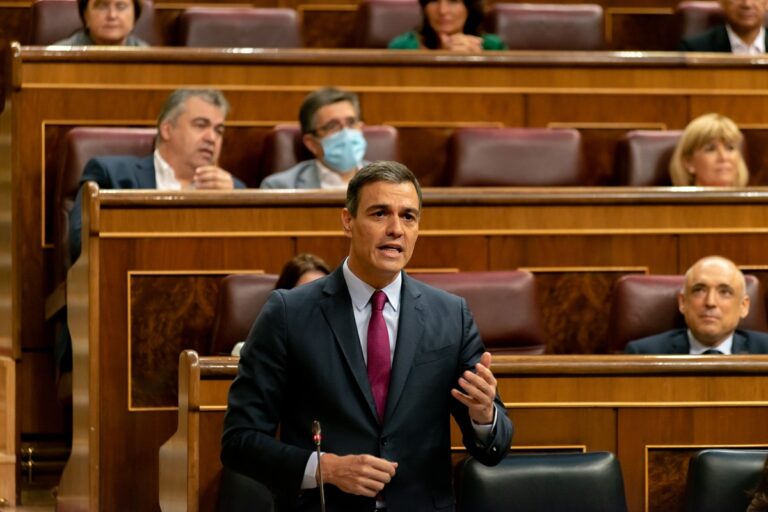
The Council of Ministers’ decision does not mean that the new bans are already in force. The draft must first be debated in the Spanish Parliament
will be debated. Members of Parliament and parliamentary groups may table amendments to weaken, tighten or delete individual provisions.
Only once it has received final approval from Congress and the Senate and has been published in the Spanish Official State Gazette (BOE) will the reform
binding. Until then, the current legal position remains unchanged: smoking is generally still permitted on terraces that are properly open,
provided that no local regulations or decision by the operator preclude this. The preliminary draft published in 2025 provided for it to come into force
20 days after publication in the BOE. Whether this deadline will remain unchanged in the final legislation will only become clear once the parliamentary
procedure.
The proposed bans would apply throughout Spain as a statutory minimum standard. The Valencian Regional Government and the local authorities could
is expected to supplement this protection with additional smoke-free areas, but will not relax the government’s regulations.
For town halls, operators and owners’ associations, the reform is likely to have mainly organisational implications: signage would need to be updated,
Ashtrays should be removed and building or usage regulations checked. The extent of the checks and which authorities are responsible depends on
depends on the relevant area and the subsequent implementing provisions.
For the time being, there will be no changes to terraces, beaches and swimming pool facilities. What matters is the final version, which will be adopted following parliamentary
Consultations will be published in the BOE.
ADVERTISEMENT