ADVERTISEMENT
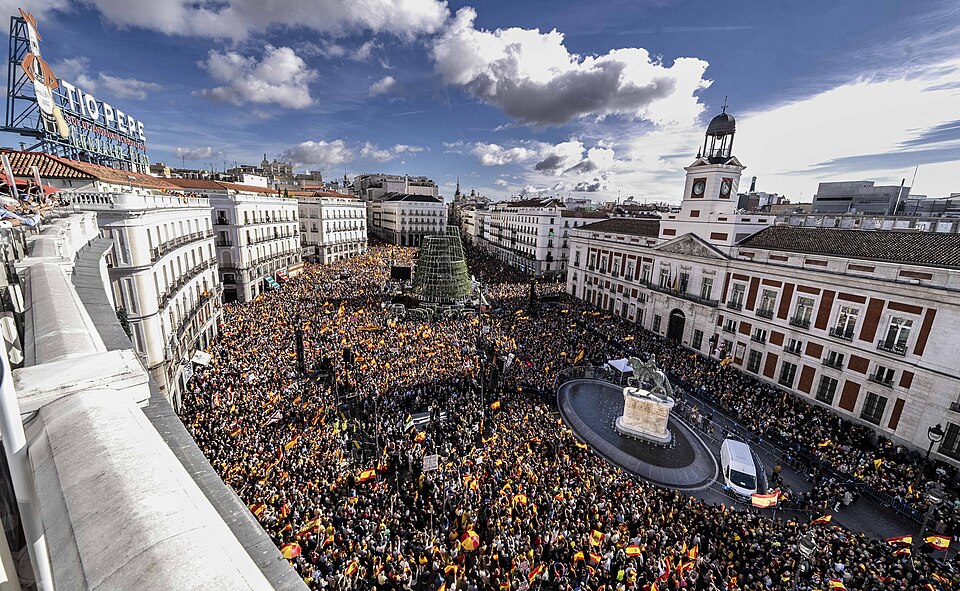
Also in Alicante, Moose and Benidorm The squares were packed. Calls are being made for more border protection, support for Ceuta and clarification of Morocco’s role. For Pedro Sánchez, the crisis is also becoming a sensitive issue because criticism is no longer coming solely from the PP and Vox.
Between 15,000 and 18,000 people in Alicante, around 7,500 in Elche and more than 5,000 in Benidorm: the nationwide rallies in support of Ceuta also mobilised thousands on the Costa Blanca on Wednesday. Alongside Spanish flags and expressions of solidarity, calls for the resignation of Prime Minister Pedro Sánchez and Interior Minister Fernando Grande-Marlaska could also be heard in many places.
More than 260 towns and local authorities had joined the call. Around 50,000 participants were counted in Madrid, and around 20,000 in Ceuta itself. The crisis on Spain’s North African border has thus definitively become a nationwide political issue.
At the end of July, more than 70,000 people arrived in Ceuta from Morocco within two days. More than 90 per cent have since returned, Mr Sánchez told Parliament on Thursday. The government has set up additional accommodation and, in early September, approved an aid package worth 309 million euros for security, public services, humanitarian aid and Ceuta’s economy.
The question of how this extraordinary mass movement came about remains a politically sensitive issue. A report by the Centro Nacional de Inmigración y Fronteras describes the action as having been planned and also refers to the behaviour of Moroccan security forces. There are indications, amongst other things, that individual officials are said to have guided migrants towards the border. However, the report does not provide any conclusive evidence that the government in Rabat ordered the action.
The rallies are focusing on tighter border controls, more staff and technical resources for the police and the Guardia Civil, additional support for Ceuta, and the lawful return of people without the right to remain. There are also calls for greater involvement from the European Union.
In Elche, the manifesto explicitly rejected all forms of racism and hatred. At the same time, many of the events were clearly critical of the government. The PSOE and Compromís, for example, did not take part in the rally in Elche; they considered the event to be too politically partisan.
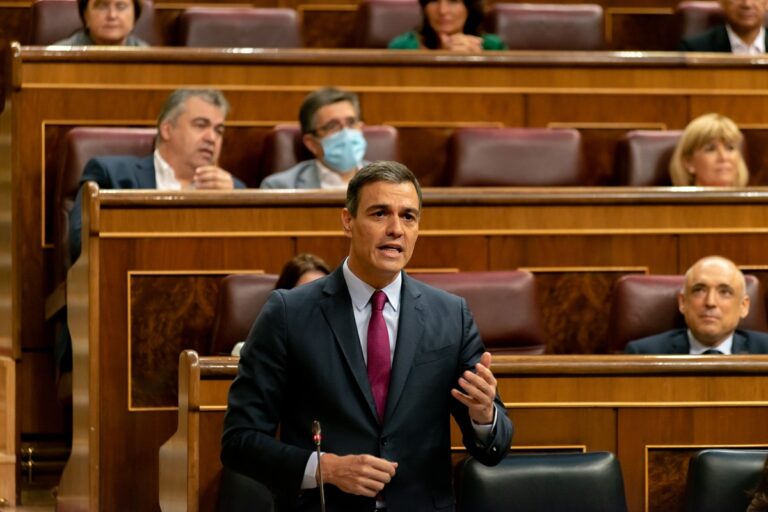
In his eagerly awaited statement to the Congreso de los Diputados on Thursday, Sánchez stood by his key position: there is as yet no solid evidence that the Moroccan government planned or organised the mass arrival. Should such evidence be presented, Spain would respond decisively.
At the same time, Sánchez announced that measures would be taken. The early-warning and coordination mechanisms are to be reviewed, and all reports available to the government concerning the days leading up to 30 July are to be published. Sánchez also stated that no intelligence agency had predicted the scale of the border crossing.
Madrid remains committed to its strategic cooperation with Morocco. However, following recent events, this cooperation is to be reassessed and the protection of Ceuta and Melilla is to be more firmly underpinned at European level.
PP leader Alberto Núñez Feijóo called on Sánchez to resign in Congress and accused the government of ignoring warnings and being too lenient towards Morocco. Vox has stepped up its attacks even further, claiming the government has failed to protect Spain’s border.
However, the resistance from within his own camp is of greater political significance to Sánchez. Sumar is calling for a more comprehensive investigation into Morocco’s role. Izquierda Unida has demanded that those responsible face the consequences should it be confirmed that crucial information was not passed on within the Ministry of the Interior. ERC and Podemos have also openly questioned Sánchez’s account of the situation regarding Morocco to date. The PNV and Junts had already pressed for the Prime Minister to appear before Congress earlier than originally planned.
The Ceuta crisis will not lead to the immediate fall of the government. However, it strikes at a vulnerable point for Sánchez: his coalition does not have a majority of its own in Parliament.
The PSOE currently has 121 MPs, and Sumar has 26. Together, that makes 147 of the 350 seats in Congress. An absolute majority requires 176 votes. Sánchez therefore remains dependent on support from, amongst others, ERC, Junts, EH Bildu and the PNV in key votes.
The more these parties collectively distance themselves from an issue, the more difficult it becomes for the government to secure majorities for legislation and other key initiatives. This is precisely where the political explosiveness of the Ceuta crisis lies: it is not the opposition alone that is jeopardising Sánchez’s ability to govern. The crucial factor is whether the parties that have supported his government in parliament so far will continue to do so.
ADVERTISEMENT