
ADVERTISEMENT
Following the collision between two high-speed trains near Toledo, the investigation is focusing on a technical fault and instructions from the traffic control centre. Spain has declared three days of national mourning. The first event cancellations have also been announced on the Costa Blanca.
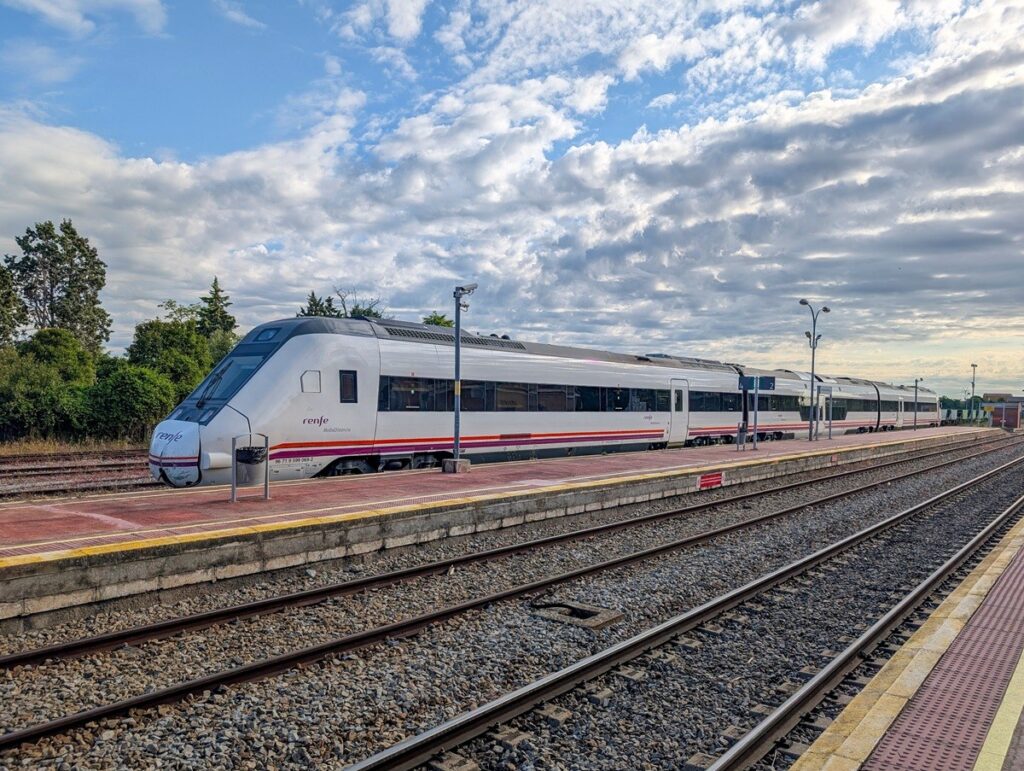
At least 68 people were killed in a serious train accident in Spain on Wednesday, 28 October. More than 100 others were injured, with 53 still in hospital on Thursday morning. Near Urda in the province of Toledo, an AVE high-speed train operated by the state-owned railway company Renfe collided with a stationary train belonging to the private operator Iryo. The investigation is now focusing on why the AVE was allowed to continue its journey despite a fault in the signalling system.
The Spanish Government has declared three days of national mourning from 29 to 31 October. High-speed rail services between Madrid and Andalusia remain suspended.
The accident occurred at around 8.53 am on the Madrid–Seville high-speed line. Around 23 minutes earlier, the LZB automatic train protection system had failed on a section of track approximately 69 kilometres long. As a result, six trains were initially forced to stop. The traffic control centre of the Spanish rail network operator Adif in Madrid-Atocha took over control. Whilst a Renfe AVE was given permission to continue, an Iryo train travelling ahead was unable to set off again due to technical problems. The AVE collided with the stationary train. Several carriages derailed, and two tumbled down an embankment. The fire service, emergency services, the Guardia Civil and the military emergency unit UME were deployed. Recovery operations continued into the early hours of Thursday morning. The death toll remains provisional.
Recordings of conversations between the train drivers and the ADIF traffic control centre, which have since come to light, are particularly revealing. The EFE news agency and the public broadcaster RTVE have analysed parts of these communications. At 8.36 am, following an attempt to restart the failed safety system, the AVE train driver was instructed to continue his journey at normal speed. At around 8.41 am, however, the female driver of the Iryo train travelling ahead reported that her train was still stationary before Urda.
Another attempt to restart the train protection system at Iryo was also unsuccessful. The traffic control centre was therefore aware of the problems with the train ahead as the AVE approached.
Investigators must now establish why the train behind was not brought to a halt in time and whether the prescribed safety procedures were followed.
According to experts, should the LZB system have failed, it may have been necessary to adopt a procedure involving a significantly reduced speed and driving by sight. Among other things, a maximum speed of 40 kilometres per hour is being discussed. It has not yet been conclusively established whether the driving authorisation granted actually contravened applicable safety regulations. Alongside the judicial investigation, an independent technical accident investigation is underway. In particular, the tachograph records, operational data and communication logs are being analysed.
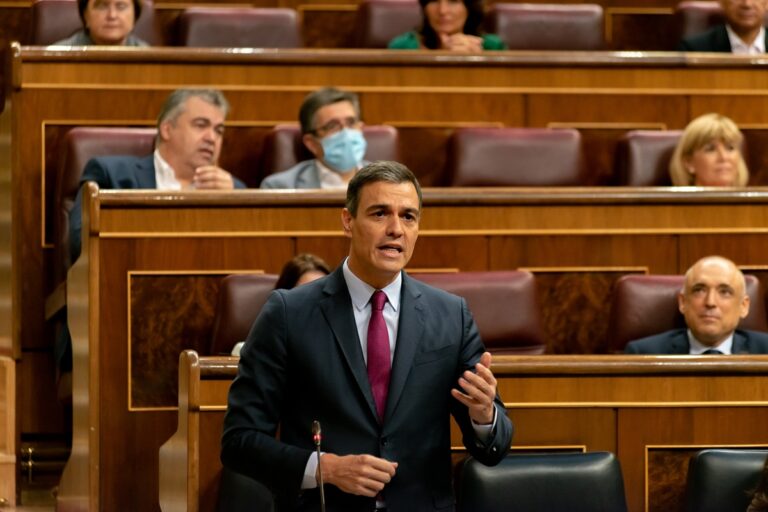
Prime Minister Pedro Sánchez visited the scene of the accident on Wednesday and promised a full investigation. By Royal Decree 949/2026, the government declared a period of national mourning from 29 October up to and including 31 October 2026. During this period, the Spanish national flag will fly at half-mast on public buildings. The measure also applies to the Valencian Community and all municipalities along the Costa Blanca. It does not, however, entail a general ban on events. The municipalities themselves will decide whether to cancel or postpone planned celebrations and public events. In the province of Alicante, Elda and Petrer have already responded. Both municipalities are suspending the majority of their local events during the period of mourning. Among other things, this affects planned Halloween celebrations, which are to be postponed to a later date. In Elda, a senior citizens’ dance and a choir performance have also been cancelled. The PYMELDA Business Forum at the Teatro Castelar, however, is set to go ahead and will begin with a minute’s silence. Further changes to the programme are possible. It is therefore advisable to check the latest announcements from the relevant local authority, particularly regarding the Halloween-related events taking place on Saturday.
The collision is having a significant impact on high-speed rail services in Spain. Renfe has confirmed that services between Madrid, Ciudad Real and Andalusia will remain suspended until further notice. As an initial contingency measure, the railway company has introduced additional trains on the conventional rail network between Madrid, Ciudad Real and Puertollano. This will extend journey times on these routes by approximately one and a half hours. From Friday 30 October, a comprehensive replacement timetable will come into effect for journeys between Madrid and Andalusia. Renfe is publishing details of journey times and routes via its official information channels. For travellers from Alicante and the Costa Blanca, the closure primarily affects train journeys via Madrid to Córdoba, Seville or Málaga. The Alicante–Madrid high-speed line itself lies outside the closed section. However, connecting services to Andalusia may be cancelled or take considerably longer.
In addition, there will be disruption on Thursday 29 October due to a train drivers’ strike that was announced previously. Renfe expressly warns that even services operating under the minimum service schedule may be affected. Passengers whose train is cancelled due to the line closure can rebook or cancel their tickets free of charge with Renfe.
Up-to-date travel information is available on Renfe’s official website (https://www.renfe.com/) and Adif (https://www.adif.es/viajeros/estado-de-la-red) is available.
Immediately after the accident, Renfe activated its crisis management team and the emergency response plan for victims of rail accidents. A freephone helpline, 900 10 10 20, has been set up for relatives and those affected. Additional support services are available at Madrid-Atocha, Seville, Córdoba and Málaga stations.
The accident has once again raised questions about the safety of Spain’s high-speed rail network. Back in January 2026, 46 people lost their lives in a train crash near Adamuz in Andalusia. Prime Minister Sánchez announced that any potential safety shortcomings would be thoroughly investigated and that the necessary improvements would be implemented. No link between the two accidents has yet been established.
As at: Thursday, 29 October 2026, morning. Casualty figures and the status of the investigation are subject to change.
ADVERTISEMENT