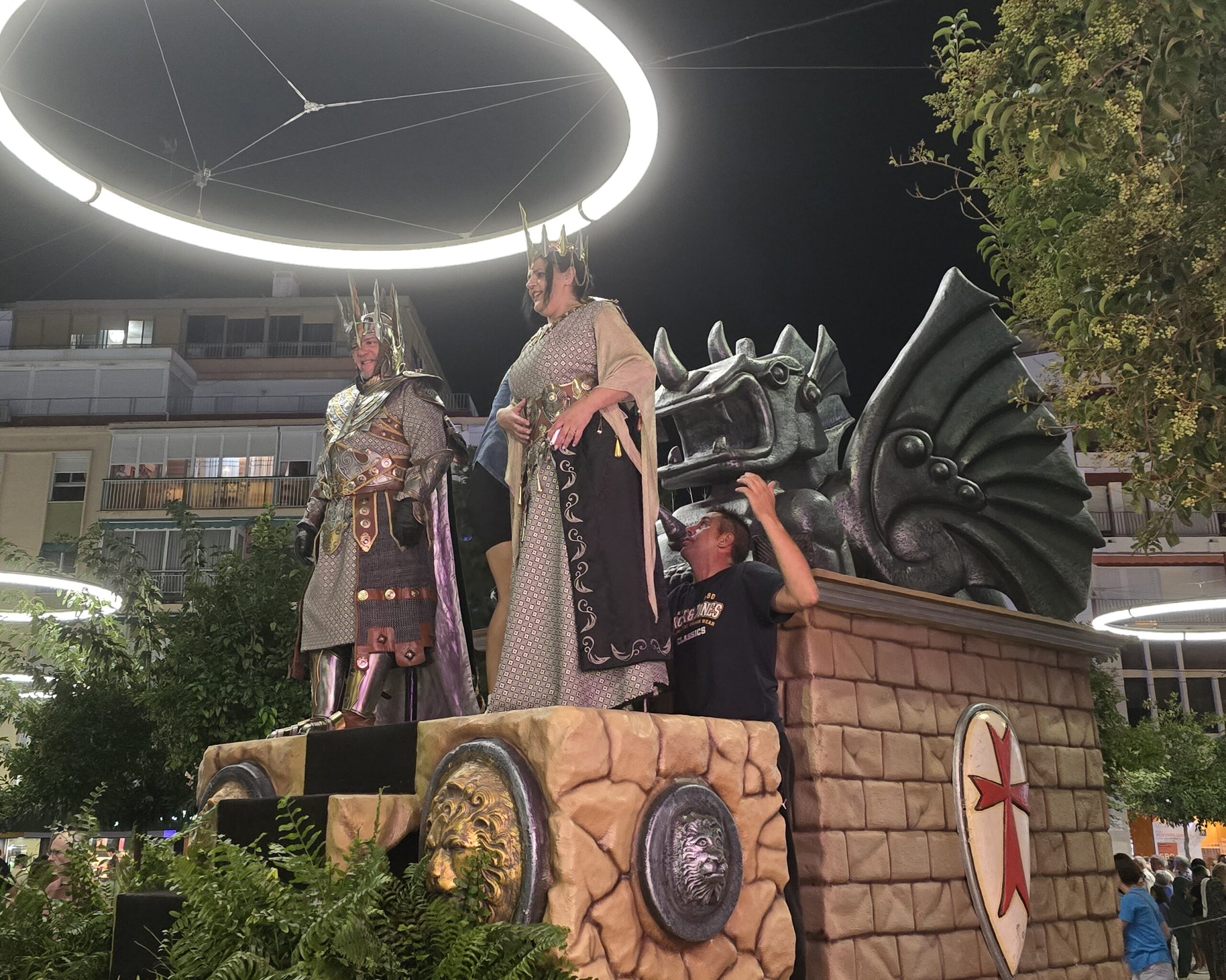
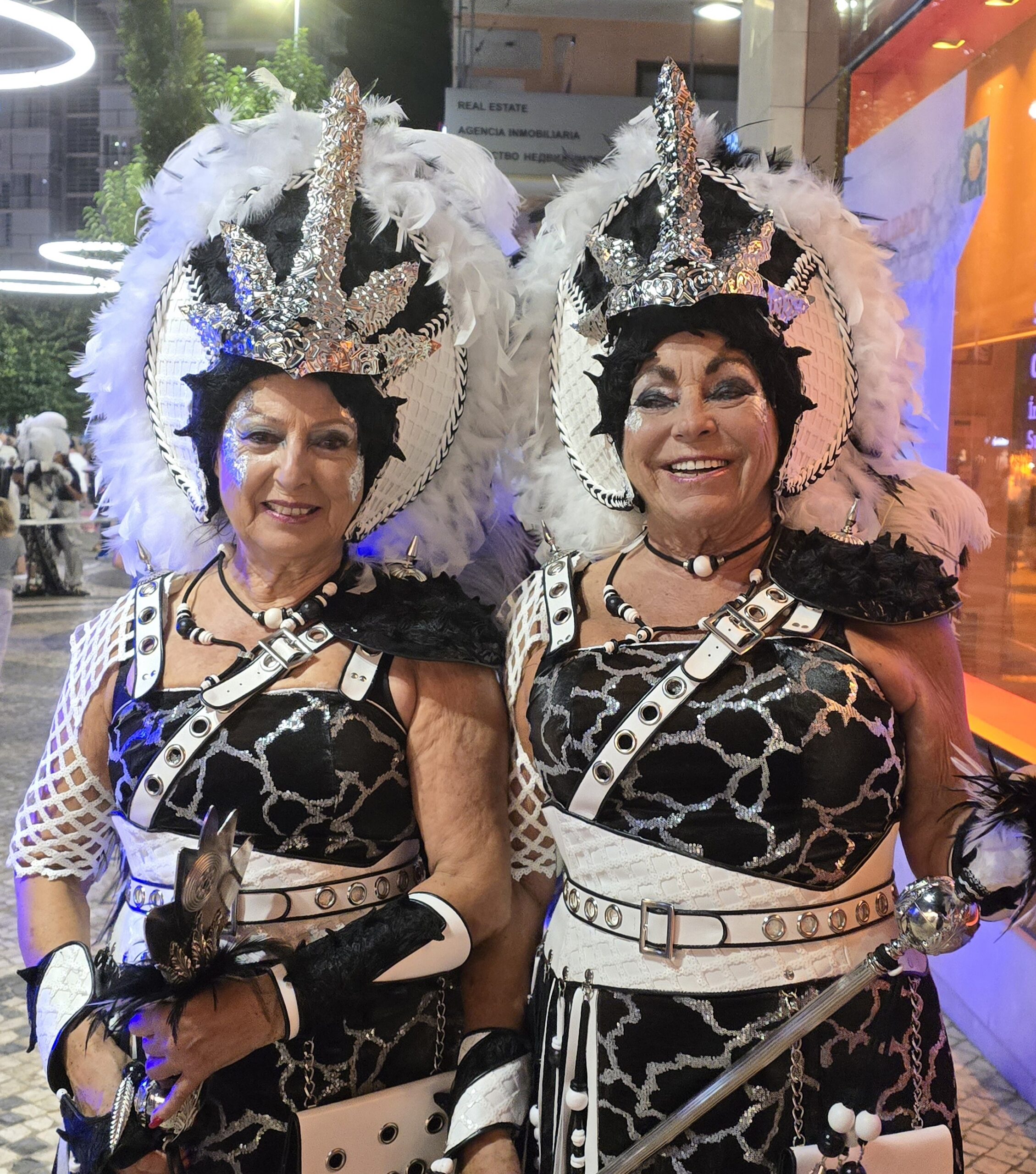
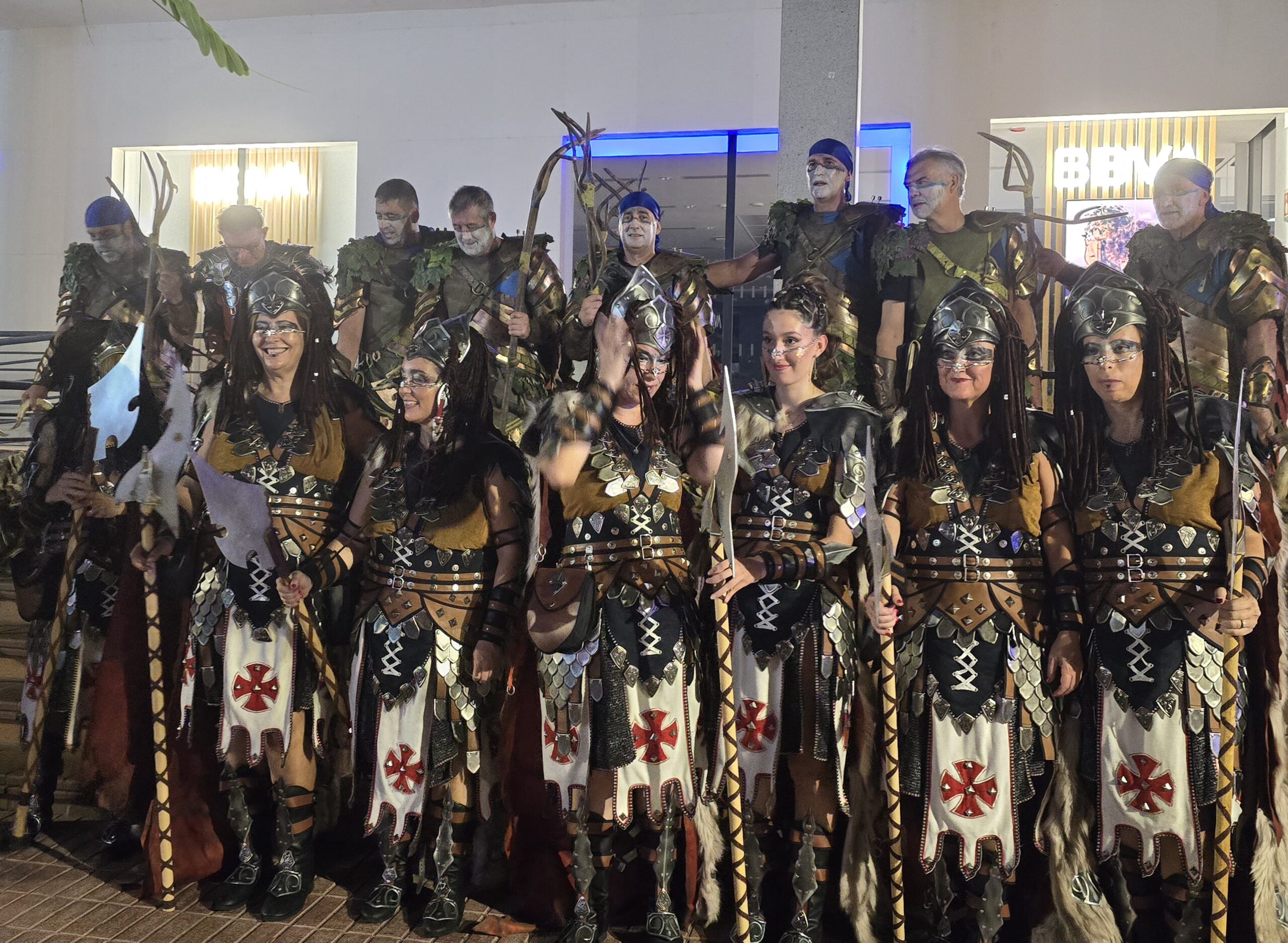
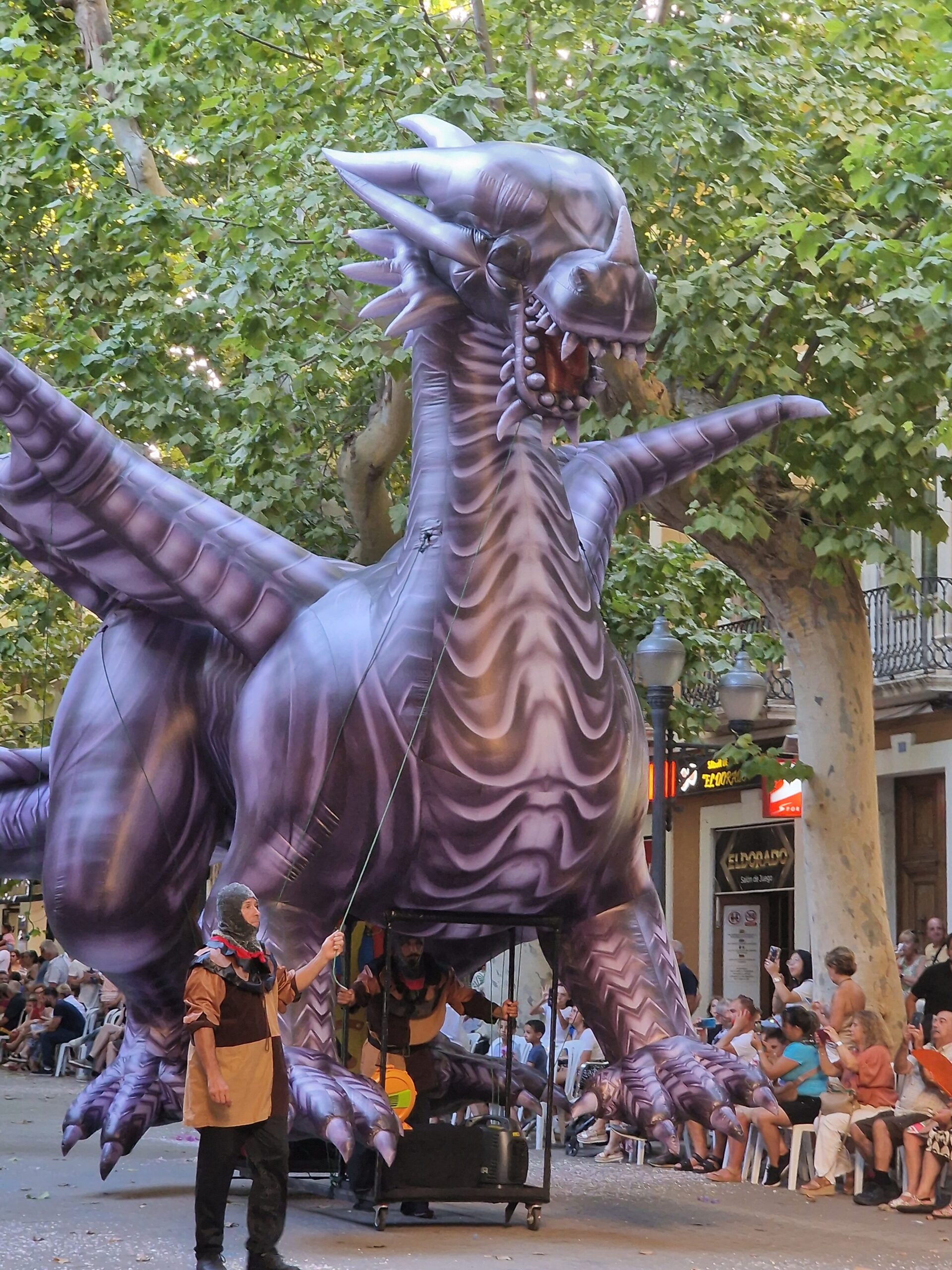
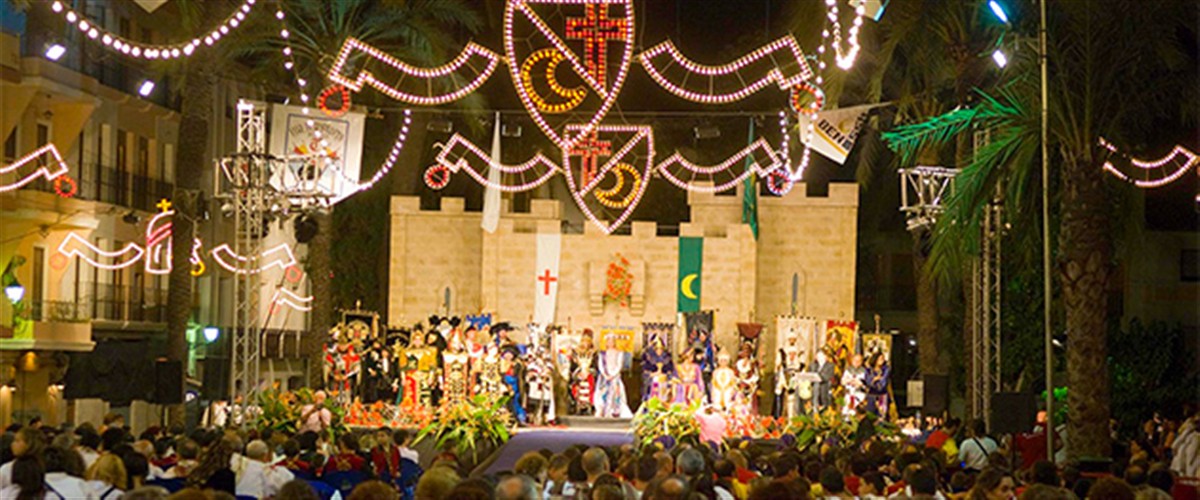

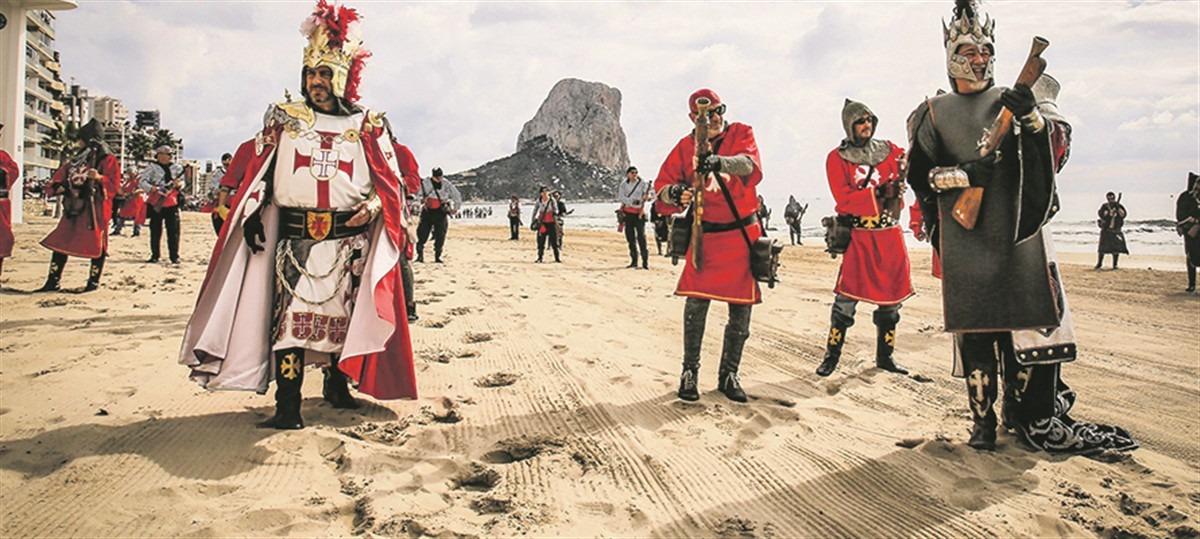


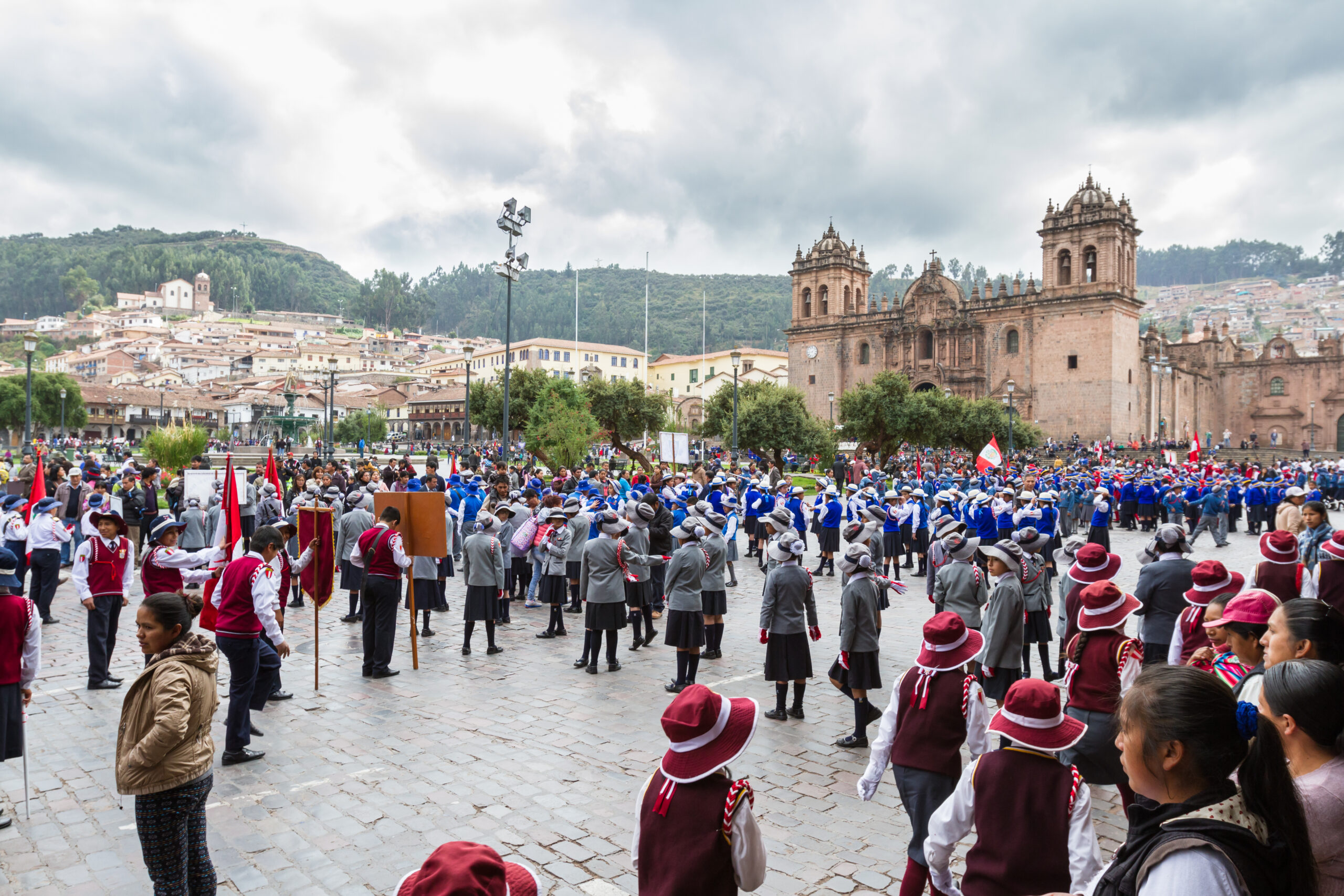
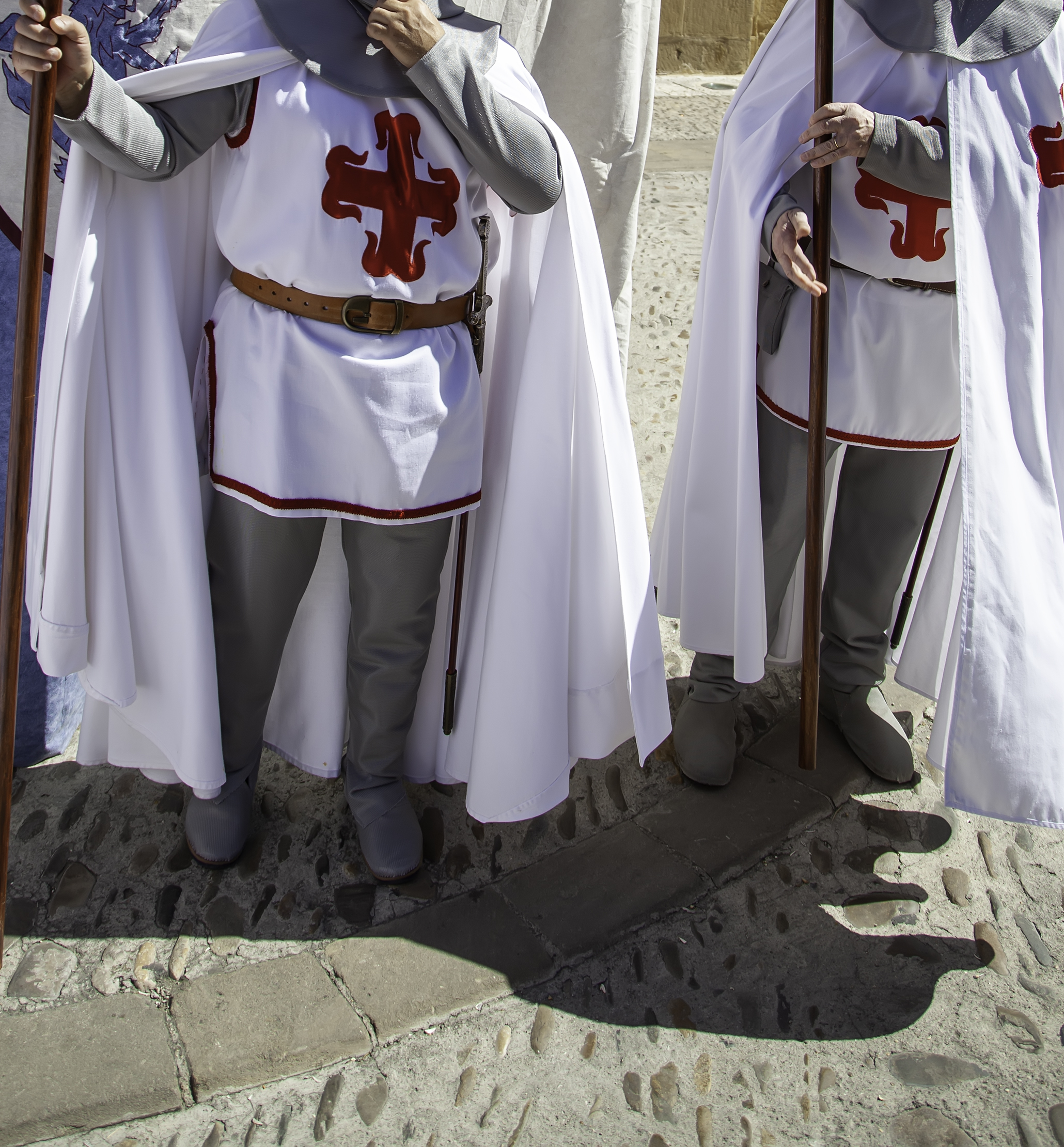

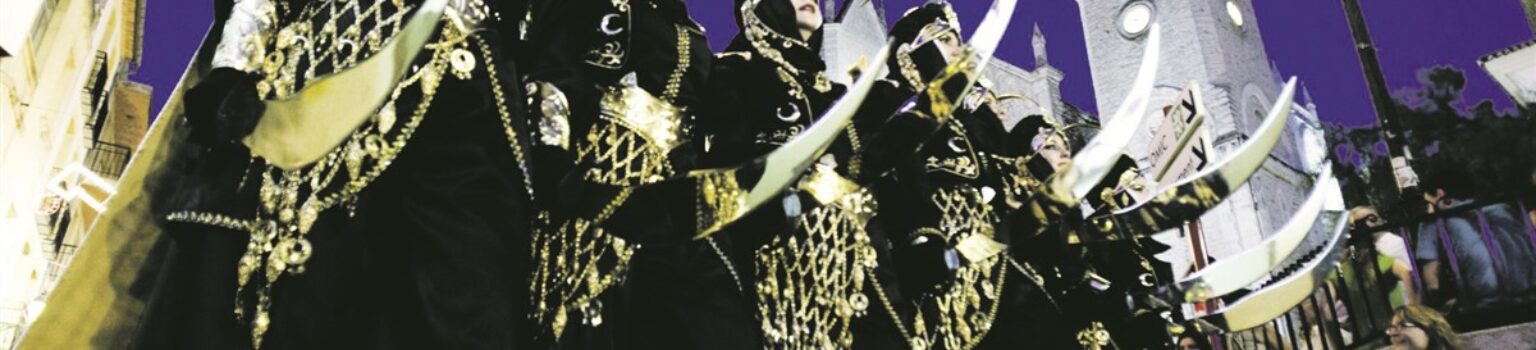
First come the drums. Then the brass. Then the street fills with heavy fabrics, shiny helmets, feather crowns, standards, horses and groups that don't just „walk along“ but have been preparing their performance for months. Moros y Cristianos are one of those festivals on the Costa Blanca where a town or village drops its normal rhythm for a few days.
In Moraira, Benissa, Xàbia, Villajoyosa, Dénia, Guardamar, Orihuela, Almoradí, Altea, Benidorm and Calp, the fiestas draw thousands onto the streets every year. Not everywhere at the same time, not everywhere of the same size - but always with music, history, local pride and an organisational effort that goes far beyond a normal summer festival.
For residents and long-term holidaymakers, it's worth taking an early look at the calendar. Some dates are among the busiest events of the year. During the big parades, roads are closed, parking spaces are scarce and the best places are quickly taken.
The festivals are reminiscent of the medieval clashes between Muslim and Christian rulers on the Iberian Peninsula. This historical material has given rise to the Costa Blanca's own festive culture: loud, precisely organised, sometimes spectacular - and in many places deeply connected to the local identity.
The main roles are played by the filaes or comparsas, the festive groups of Moros and Cristianos. They have their own colours, costumes, pieces of music, marching formations and fixed roles in the process. Many families are involved for generations. Children grow into it, young people take on their first roles, adults appear as capitanes, abanderados or ambassadors.
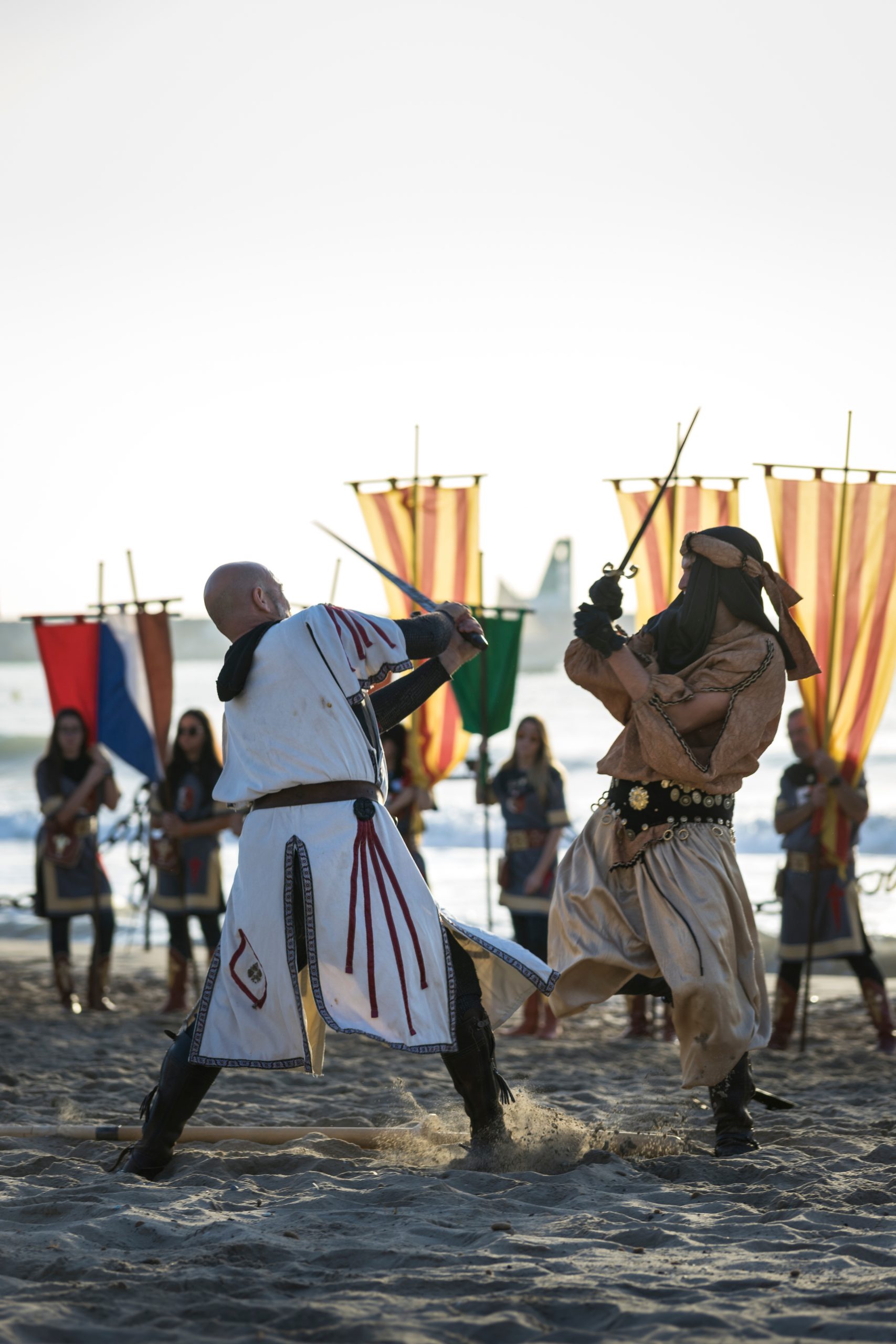
The big moment is usually the entradas, the ceremonial entry of the groups. There are also embajadas, in which conquest, negotiation and reconquest are staged. Some towns have their own highlights: In Villajoyosa it is the famous Desembarco on the beach, in Moraira the Conquista Mora and Reconquista Cristiana, in Xàbia the parades in the harbour district of Duanes de la Mar.
Moraira opens the Moros-y-Cristianos season for many in the Marina Alta. The highlights of the programme are the Conquista Mora on 12 June, the Reconquista Cristiana on 13 June and the Desfile de Gala on 14 June.
The town is manageable, the distances are short and the backdrop by the sea gives the festival a unique setting. For readers from Teulada, Benissa, Benitatxell, Jávea and Calp, Moraira is one of the best places to start.
Benissa celebrates Apóstol in honour of San Pedro. The date is traditionally around 29 June. In 2026, the period from 28 June to 2 July will be used.
The festival has a different feel to the big coastal towns. The streets in the town centre are narrower, the music is closer together and the parades do not run along a random promenade, but right through the centre of the town. This is exactly what makes Benissa so interesting for the Marina Alta.
July 2026, big parades on 18 and 19 July
In Xàbia, the fiesta belongs to Duanes de la Mar. The harbour, the sea, the narrow streets and the evening atmosphere give the parades their own special tone. The big desfiles are scheduled for 18 and 19 July.
Xàbia is not a sideshow. The Moros y Cristianos are a firm summer fixture here, especially for the northern Costa Blanca.
It's also worth taking a look at the festive calendar in the south of the Costa Blanca. Guardamar del Segura celebrates from 17 to 27 July as part of the Fiestas Patronales in honour of San Jaime. Almoradí combines Feria and Moros y Cristianos from 24 July to 2 August. Orihuela focuses on a particularly strong historical reference with its Fiestas de la Reconquista.
For readers from Torrevieja, Orihuela Costa, La Zenia, Guardamar and the Vega Baja, these dates are often closer and more practical than the big festivals in the north.
Villajoyosa is the big name among the Moros-y-Cristianos festivals on the Costa Blanca. The festivities in honour of Santa Marta run every year from 24 July to 2 August 2026, with the most famous act being the Desembarco, the re-enacted landing on the beach.
This is not just about a parade. Villajoyosa combines the sea, town history, music, festive groups and a production that is known far beyond the region. La Vila Joiosa is the clear summer highlight of the events calendar.
13-16 August 2026
Dénia traditionally celebrates its Moros y Cristianos in August in honour of Sant Roc. The detailed programmes are usually published later, but the period 13-16 August should already be noted.
The parades pass through central areas of the city. This makes Dénia one of the most important dates in August for the northern Costa Blanca.
Murcia is located outside the Costa Blanca, but is easily accessible for readers from Torrevieja, La Zenia and Orihuela Costa. The Moros y Cristianos de Murcia will run from 9 to 16 September 2026 and is a strong additional date for the south.
26 to 30 September 2026
Altea is one of the most important autumn dates in the Marina Baixa. The Moros y Cristianos are part of the big local festivities and run from 26 to 30 September 2026.
After the summer festivals, Altea once again brings a packed programme of parades, music and evening events to the calendar.
Benidorm celebrates its Moros y Cristianos 2026 from 1 to 4 October. This is an important date for the Marina Baixa: central, easily accessible and with the visibility that Benidorm almost automatically brings to events.
16 to 22 October 2026
Calp is particularly interesting in 2026 because the Moros y Cristianos are celebrating their 50th anniversary there. The celebrations traditionally take place in October. The exact main days should be checked again via the Ayuntamiento or the festival website before the event calendar is published.
This year, the anniversary makes Calp more editorial than usual. For readers from Calp, Benissa, Moraira and Altea, the date belongs in the diary.
Location | Date 2026 | Note |
Moraira | 5-14 June | Conquista Mora, Reconquista Cristiana, Gala Parade |
Benissa | 28 June-2 July | Moros y Cristianos in honour of San Pedro |
Xàbia / Jávea | 11-19 July, big parades 18/19 July | Duanes de la Mar harbour district |
Guardamar del Segura | 17-27 July | Fiestas Patronales and Moros y Cristianos |
Villajoyosa / La Vila Joiosa | 24-31 July | Desembarco, one of the best-known dates |
Almoradí | 24 July-2 August | Feria and Moros y Cristianos |
Orihuela | July | Fiestas de la Reconquista |
Dénia | 13-16 August | In honour of Sant Roc |
Murcia | 9-16 September | Peripheral area, particularly interesting for the south |
Altea | 26-30 September | Autumn date in the Marina Baixa |
Benidorm | 1-4 October | Moros y Cristianos in the centre |
Calp / Calpe | 16-22 October | 50 years of Moros y Cristianos |
In Moros y Cristianos, a normal town centre quickly turns into a festival zone. Roads are closed, car parks disappear and restaurants along the parade routes are full early on. If you want to see one of the big desfiles, it's better to plan a little extra time.
For families: drums, horns and pyrotechnics can get quite loud. On wider streets you can see the formations better, in narrow alleyways you are closer to the music and festive groups. Both have their appeal - it's just that spontaneously driving through on such evenings rarely works.
Moros y Cristianos are not effective because they are smoothly staged. They work because the towns themselves are behind them. Festive groups, music clubs, families, tailors, volunteers, town halls and entire neighbourhoods work for months towards these days.
You can see the effort. You can hear it. And you quickly realise that no one is just parading through the streets for a few photos. These fiestas belong to the Costa Blanca like hardly any other summer and autumn event: loud, precise, sometimes exuberant - but never arbitrary.
ADVERTISEMENT