
ADVERTISEMENT
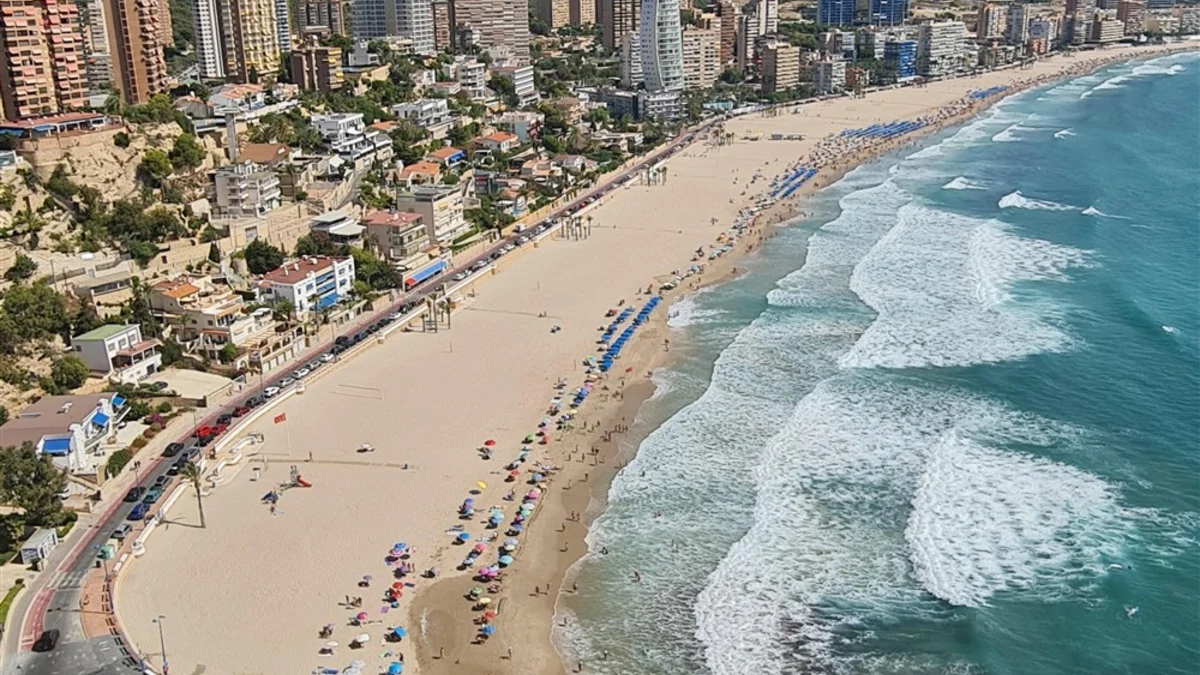
Whilst many holiday resorts on the Costa Blanca quieten down after the summer, hotels in Benidorm remain well booked and the bars bustling. British party-goers, Spanish holidaymakers and young people combining work with a spot of sun ensure there’s plenty of activity even in autumn. But why is Benidorm different?
The summer holidays are over, the beaches are emptying out and some restaurants are closing for the winter break. That’s what autumn looks like in many holiday resorts along the Costa Blanca. Not necessarily in Benidorm, though. Here, people are still partying, holidaying and going out late into the night, even in October.
This town in the Marina Baixa, situated between Altea and Villajoyosa, has developed over the decades into an international holiday destination. Its high-rise buildings, the Levante and Poniente beaches, and its vibrant nightlife are now just as characteristic of the town as its tourism, which extends well beyond the summer months.
Spanish holidaymakers were already visiting Benidorm by the mid-20th century. The town’s transformation into an international holiday resort began in the 1950s under Mayor Pedro Zaragoza Orts.
The 1956 town development plan laid the foundations for the expansion of tourism. Hotels, new roads and increasingly dense development transformed the former fishing and farming village. In the decades that followed, the town’s distinctive skyline of high-rise buildings took shape.
In 1959, the Festival de la Canción de Benidorm was held for the first time, bringing the town to national attention. In the 1960s, international tour operators began bringing increasing numbers of foreign visitors to the coast. The opening of Alicante-Elche Airport in 1967 made it easier to get there.
Benidorm became a popular holiday destination, particularly for British tourists. Package holidays, affordable hotels, the warmer climate and a growing range of entertainment options made the town attractive. At the same time, Spanish families and holidaymakers from Germany and other European countries began to visit.
The British influence is still evident today. Particularly around Calle Gerona, pubs, sports bars and restaurants characterise the street scene.
Manny Lewis has travelled here from Wales. This is his second visit to Benidorm; this time he’s here for a birthday party. When asked why he’s drawn here right now, he has a clear answer: „This is the party capital.“
Even his previous visit – a stag do a year or two ago – was all about partying. Then there’s the weather. He wanted to escape the grey, cold weather in Wales. He has noticed one difference since his last visit, though: he reckons prices have gone up a bit.


Julian, 21, and Lennox, 20, have completely different plans. The pair have rented a flat through Airbnb. Instead of a party holiday, their plans include work and sport.
„We’re actually only here to work,“ says Julian. The more pleasant climate was one of the reasons for the trip. It’s the first time either of them has been to Benidorm.
Julian had previously spent some time in Limassol, Cyprus, and ended up in Benidorm rather by chance. “We’re actually only here to work,“ says Julian. The more pleasant climate was one of the reasons for coming to Spain. It’s the first time either of them has been to Benidorm.
Whether it’s a birthday party or working under the southern sun – Benidorm offers the right facilities even outside the summer holidays.
The latest hotel figures from the HOSBEC hotel association show just how popular Benidorm remains even after the summer.
Period | Hotel occupancy |
January 2026 | 64,6 % |
Second half of August 2026 | 93,7 % |
September 2026 | 91,7 % |
First half of October 2026 | 87,1 %* |
October: confirmed hotel bookings as at 2 October; no final occupancy figures. All figures relate to available hotel capacity.
Over the bank holiday weekend from 9 to 12 October, hotels achieved an actual occupancy rate of 91.2 per cent. Even in January, one of the quietest months for travel, almost two-thirds of available hotel capacity was occupied.
What is particularly striking is how the origin of hotel guests changes over the course of the year.
According to figures from the hotel association HOSBEC, in September 2026 a total of 43.5 per cent of hotel guests came from the United Kingdom and 34.8 per cent from Spain. These were followed by Portugal with 5 per cent, the Netherlands with 2.8 per cent, and Belgium and Ireland with 2.4 per cent each.
In the second half of August, however, Spanish visitors accounted for 36.5 per cent, followed by British visitors at 32.5 per cent and Portuguese visitors at 13.9 per cent.
In January, Spanish and British holidaymakers each accounted for around 40 per cent of hotel guests. The British market, in particular, therefore remains important even outside the peak season.
A few kilometres of coastline can make a marked difference in autumn. Whilst Benidorm continues to welcome international hotel guests, the tourist scene in Xàbia (Jávea) and Villajoyosa (La Vila Joiosa) changes more noticeably after the summer.
Holiday homes, flats and second homes play an important role in Xàbia. In the Arenal area in particular, tourist activity winds down after the summer holidays, whilst the old town and the harbour continue to be characterised by their everyday life throughout the year.
Villajoyosa, on the other hand, has a local economy of its own alongside tourism. The tourist beach areas may become quieter in the autumn, but this does not mean that the rest of town life comes to a standstill.
Benidorm stands out due to the high international demand for hotels and a range of entertainment options that is not limited to the summer holidays. Many hotels remain well occupied even in autumn and winter. This benefits restaurants, bars and shops, which continue to cater for large numbers of holidaymakers.
There is no evidence to suggest that more shops in Xàbia and Villajoyosa actually close for the season. The main difference lies in the tourism structure of the three towns.
Sources: HOSBEC, University of Alicante (History of Benidorm)
Charlotta Rehagel & Mia Breitenstein
ADVERTISEMENT